
407: Why Might the Arts Teach the Holocaust More Powerfully Than History Alone?
Subscribe to the "Getting Unstuck – Cultivating Curiosity" podcast.



Guest
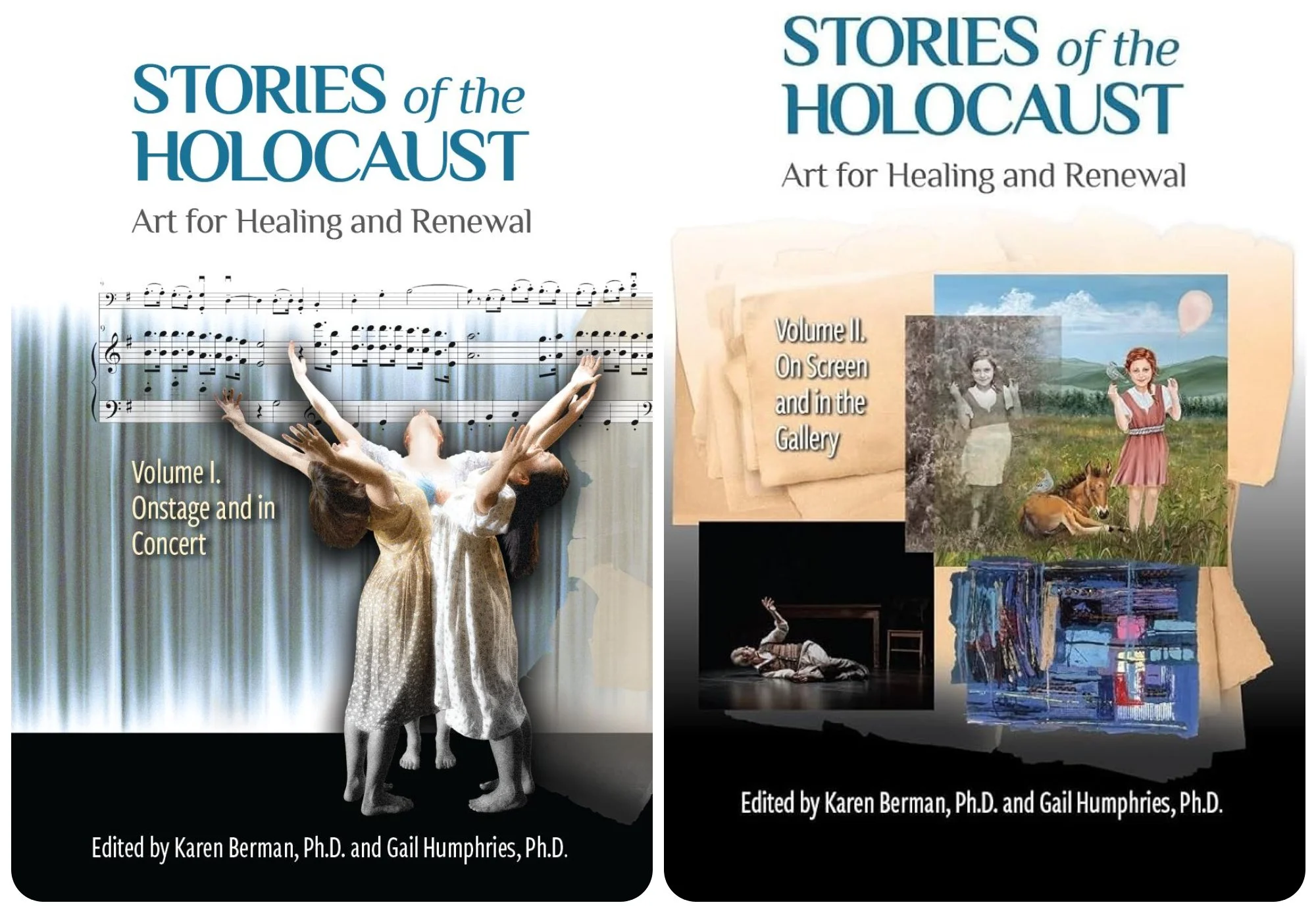
Karen Berman, Ph.D., Chaired the Department of Theatre and Dance at Georgia College and previously taught for 15 years at Georgetown University. She is Dean Emerita, College of Fellows of the American Theatre; Past President of the Association for Theatre in Higher Education; Director of 150 Holocaust and other theatre productions; and winner of the Georgia Governor’s Award for the Arts and the Hillel Heroes Award. Karen is co-Artistic Director of Washington Women in Theatre. She is the co-author with Dr. Gail Humphries of the two-volume work, Stories of the Holocaust: Art for Healing and Renewal.

Co-host
Irene Stern Frielich was a guest on Episode 370: “Walking Where History Happened: A Daughter's Holocaust Journey.” Irene is the daughter of a German Jewish Holocaust survivor—but for much of her life, the story remained unspoken. In 2017, after rediscovering her father’s testimony, Irene set out to physically retrace his escape route from Nazi Germany through his survival in Holland. The result was a journey of reconciliation and healing. Her award-winning memoir, Shattered Stars, Healing Hearts, explores trauma, courage, and connection across generations.
Summary

The brooch Irene’s father created while in hiding from the Nazis.
In this episode, Jeff and co-host Irene Stern Frielich speak with Dr. Karen Berman about the role of the arts in Holocaust education and remembrance. Dr. Berman discusses her five-year project to co-edit two volumes featuring 33 contributors who explore how theater, music, visual art, and film illuminate the Holocaust and its aftermath. The books argue that the arts can foster empathy, healing, and social responsibility while inspiring people to become “upstanders” who actively oppose hate and injustice.
The conversation explores how artistic expression functioned as both resistance and survival during the Holocaust. A powerful example is the performance of Verdi’s Requiem in the Theresienstadt concentration camp, where imprisoned singers used music as a form of spiritual defiance against their captors.
The discussion also examines how Holocaust education is evolving. Scholars and educators are increasingly shifting from purely historical instruction toward approaches that engage students emotionally and morally through storytelling, performance, and immersive technologies such as virtual reality and holographic survivor testimony.
Ultimately, the episode emphasizes that art has the power to humanize history, deepen empathy, and transform audiences into witnesses. By connecting personal stories with creative expression, educators and artists can ensure that Holocaust memory remains meaningful—and that the lessons of history inspire moral action today.
The Essential Point
The episode emphasizes that art has the power to humanize history, deepen empathy, and transform audiences into witnesses. By connecting personal stories with creative expression, educators and artists can ensure that Holocaust memory remains meaningful—and that the lessons of history inspire moral action today.
Social Media
Website: Stories of the Holocaust: Art for Healing and Renewal: www.storiesoftheholocaust.com
Georgia Governor’s Award for the Arts: https://share.google/7ZF1jsonbwuBfMeDr
Hillel Heroes Award: https://share.google/AVs09ck8I9RpdVIDb
Kirkus Reviews
Stories of the Holocaust: Art for Healing and Renewal. Volume I
https://www.kirkusreviews.com/book-reviews/karen-berman/stories-of-the-holocaust/
Stories of the Holocaust: Art for Healing and Renewal. Volume II
https://www.kirkusreviews.com/book-reviews/karen-berman/stories-of-the-holocaust-2/
Referenced
Defiant Requiem: Verdi at Terezín
Virtual reality video of a Holocaust survivor revisiting the Majdanek concentration camp: Pilgrim in the Metaverse

About Jeff
Jeff Ikler is the Director of Quetico Leadership and Career Coaching. “Quetico” (KWEH-teh-co). He works with leaders in all aspects of life to identify and overcome obstacles in their desired future. He came to the field of coaching after a 35-year career in educational publishing. Prior to his career in educational publishing, Jeff taught high school U.S. history and government.
Jeff has hosted the “Getting Unstuck—Cultivating Curiosity” podcast for 5 years. The guests and topics he explores are designed to help listeners think differently about the familiar and welcome the new as something to consider. He is also the co-host of the Cultivating Resilience – A Whole Community Approach to Alleviating Trauma in Schools, which promotes mental health and overall wellness.
Jeff co-authored Shifting: How School Leaders Can Create a Culture of Change. Shifting integrates leadership development and change mechanics in a three-part change framework to help guide school leaders and their teams toward productive change.
Show Credits
"Getting Unstuck" is commercial-free. It’s brought to you by Jeff Ikler, his amazing guests, and Neil Hughes, the best engineer a podcaster could ask for.
"Getting Unstuck" theme music: Original composition of "Allegro ben ritmato e deciso" by George Gershwin. Arrangement and recording courtesy of Bruno Lecoeur.