
414: How Do Memorials Engage Visitors Physically and Mentally?

Thumbnail image on the website
The Memorial to the Murdered Jews of Europe. Designed by New York architect Peter Eisenman, the memorial was ceremonially opened in 2005. On a site covering 19,000 square meters, Eisenman placed 2710 concrete stelae of different heights. Stelae are upright stone slabs or pillars, often carved with inscriptions or reliefs, used for commemorative, funerary, or marker purposes. The area is open day and night, and from all four sides, you can fully immerse yourself in the fully accessible spatial structure. The memorial is on a slight slope, and its wave-like form varies depending on where you stand. The uneven concrete floor gives many visitors a moment of uncertainty. Its openness and abstractness give you space to confront the topic in your own personal way.
Subscribe to the "Getting Unstuck – Cultivating Curiosity" podcast.



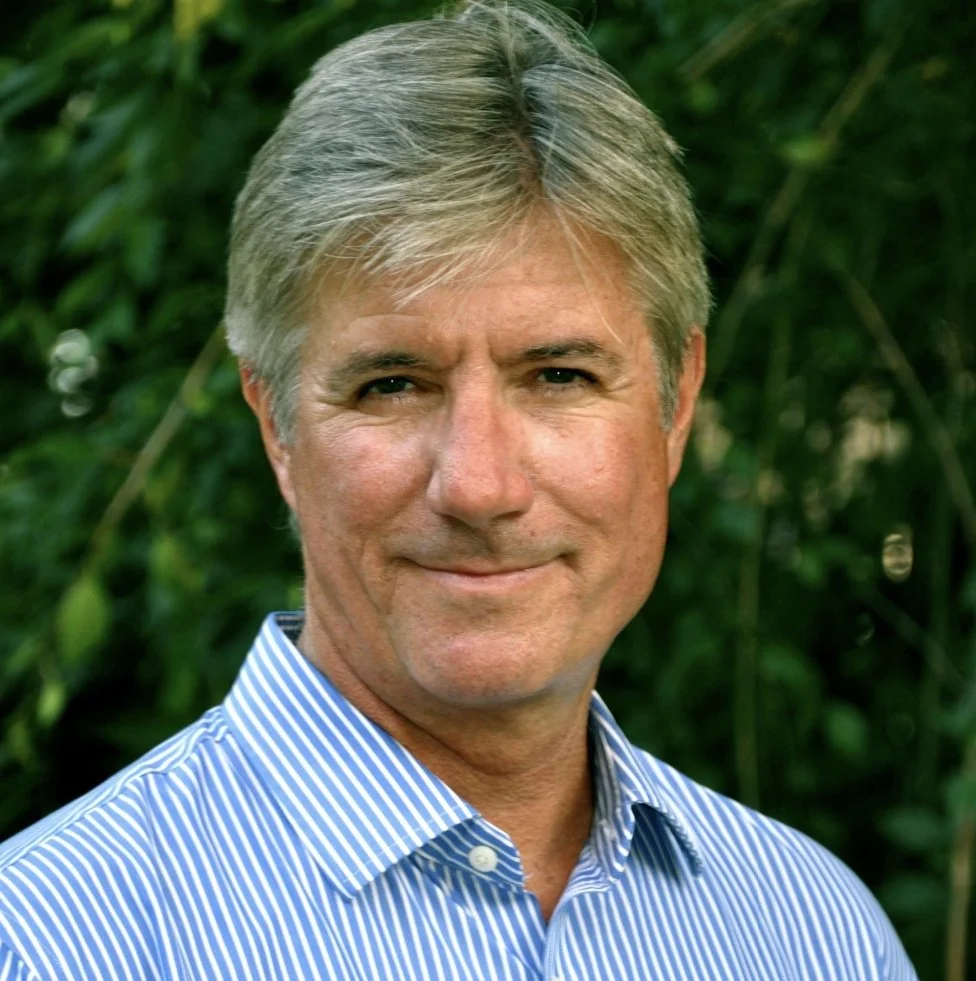
Guest
Dr. James E. Young is Distinguished University Professor of English and Judaic Studies Emeritus at the University of Massachusetts, Amherst, where he has taught since 1988, and Founding Director of the Institute forHolocaust, Genocide, and Memory Studies at UMass Amherst.
Professor Young is the author of Writing and Rewriting the Holocaust (Indiana University Press, 1988), The Texture of Memory (Yale University Press, 1993), which won the National Jewish Book Award in 1994, At Memory’s Edge: After-images of the Holocaust in Contemporary Art and Architecture (Yale University Press, 2000), and The Stages of Memory: Reflections on Memorial Art, Loss, and the Spaces Between (University of Massachusetts Press, 2016), which won the National Council for PublicHistory Book Award for 2017.
Professor Young is a frequent consultant and judge on proposed memorials.

Co-host
Irene Stern Frielich was a guest on Episode 370: “Walking Where History Happened: A Daughter's Holocaust Journey.” Irene is the daughter of a German Jewish Holocaust survivor—but for much of her life, the story remained unspoken. In 2017, after rediscovering her father’s testimony, Irene set out to physically retrace his escape route from Nazi Germany through his survival in Holland. The result was a journey of reconciliation and healing. Her award-winning memoir, Shattered Stars, Healing Hearts, explores trauma, courage, and connection across generations.
Summary
Dr. James Young explores how memorials differ from monuments and how they shape collective memory. While monuments are often static and fixed, memorials are dynamic, experiential spaces that invite visitors to engage emotionally and physically—becoming part of what Dr. Young calls the “performance of memory.”
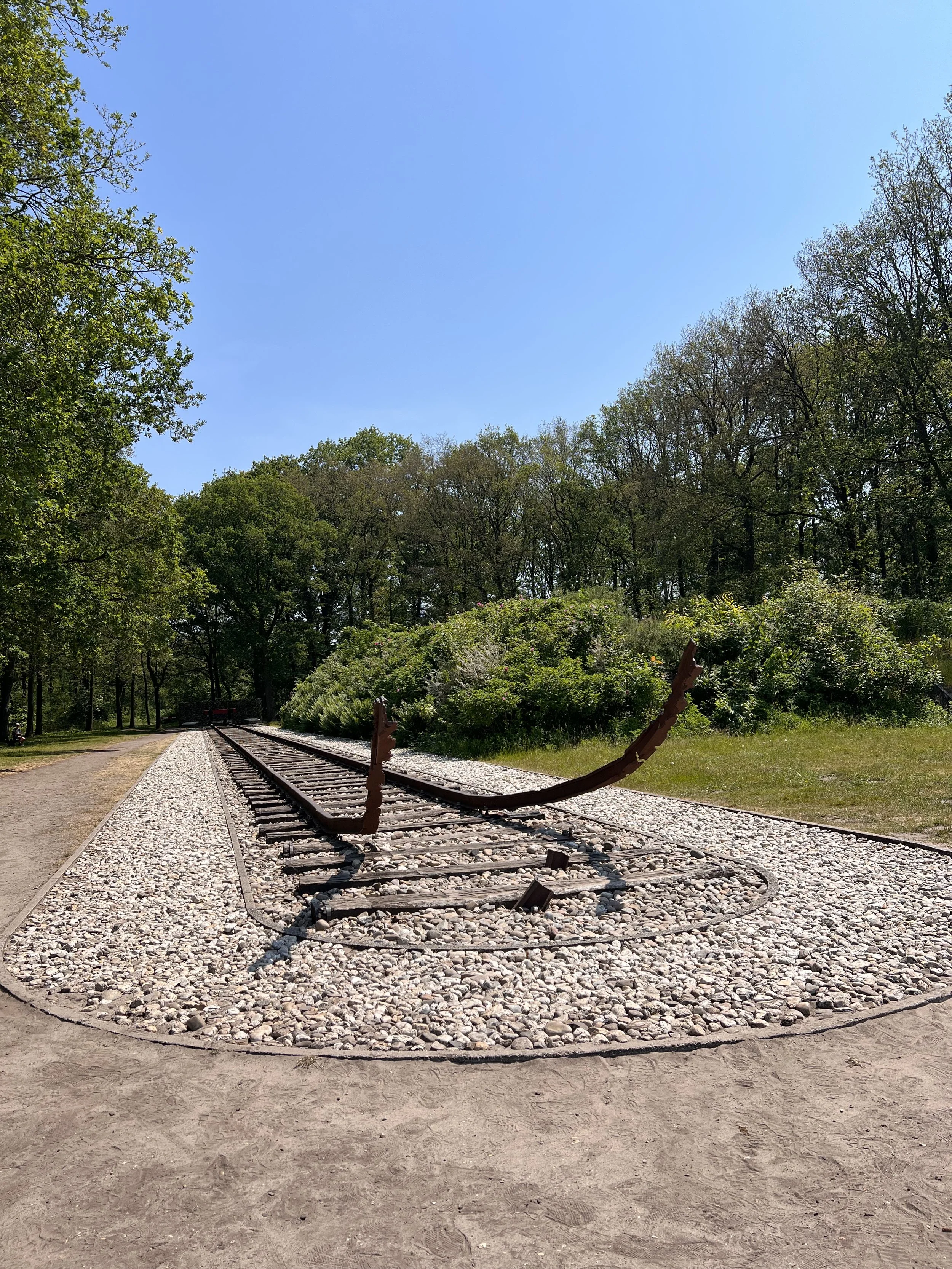
Westerbork transit camp, northern Holland. This memorial lies at the end of the rail line that brought Dutch Jews and other prisoners to the camp. The curvature of the rail end invites visitors' interpretation.
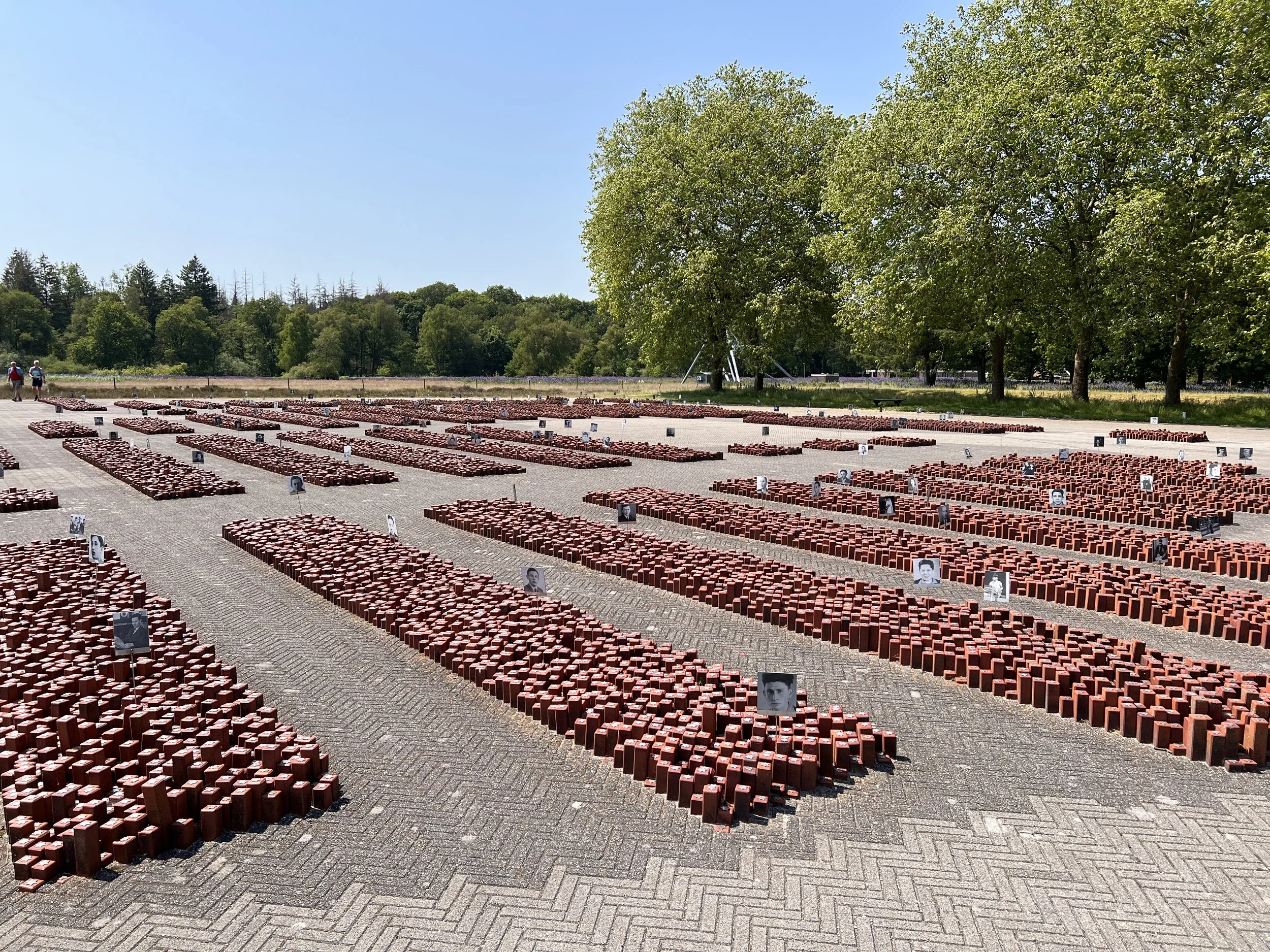
Westerbork transit camp, northern Holland. This is the roll call area where the prisoners lined up twice a day. The memorial commemorates the 102,000 Dutch Jews who were murdered in the Holocaust. Each stone, though unnamed, represents an individual. Note that the stones are of different heights, potentially representing men, women, and children.
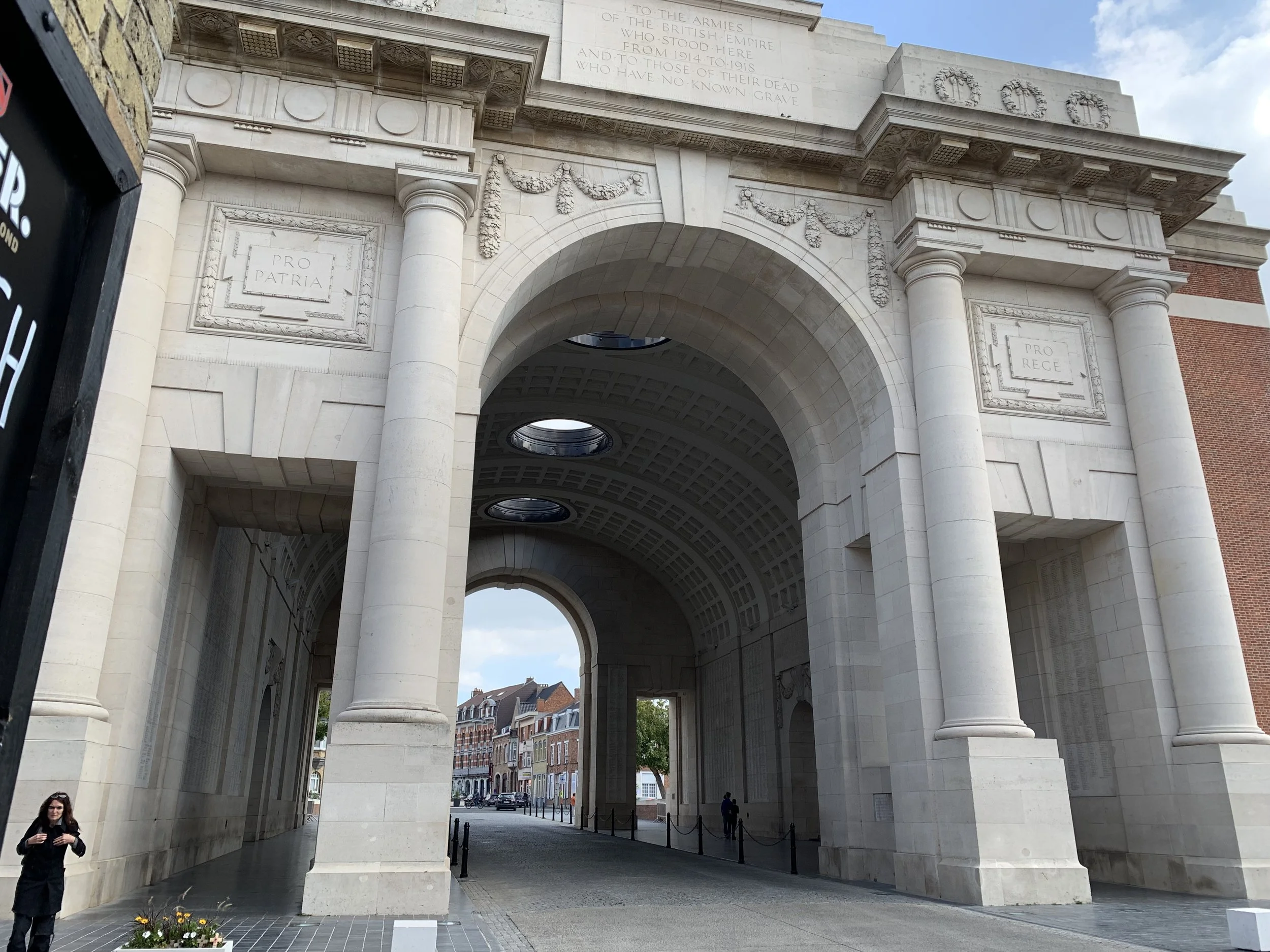
The Menin Gate, Memorial to the Missing in Ypres, Belgium. Thousands of British and Commonwealth troops marched into battle down this lane in the early days of WWI. The walls of the memorial list the more than 54,000 whose remains were never found.
Drawing on examples such as the Vietnam Veterans Memorial, Holocaust memorials, and the 9/11 Memorial, Dr. Young explains that the most effective memorials balance abstraction and history, allowing visitors to interpret meaning across generations. He emphasizes that powerful designs avoid prescribing a single emotional response; instead, they open space for reflection, discomfort, and personal connection.

Shoes on the Danube. Budapest, Hungary. There, along the Danube River, sixty pairs of rusted bronze shoes memorialize the place where, during the winter of 1944-1945, a violent anti-Semitic group forced Jews to remove their shoes and then tied the individuals together in small groups. They then shot one or two members of each group who fell into the river, dragging the rest of the group to drown in the icy water.
Dr. Young also highlights the importance of naming individuals, noting that listing victims humanizes loss and magnifies its scale. He discusses innovative approaches like “meaningful adjacencies” at the 9/11 Memorial and decentralized memorials such as Stolpersteine (stumbling stones), which embed remembrance into everyday life and create ongoing engagement.
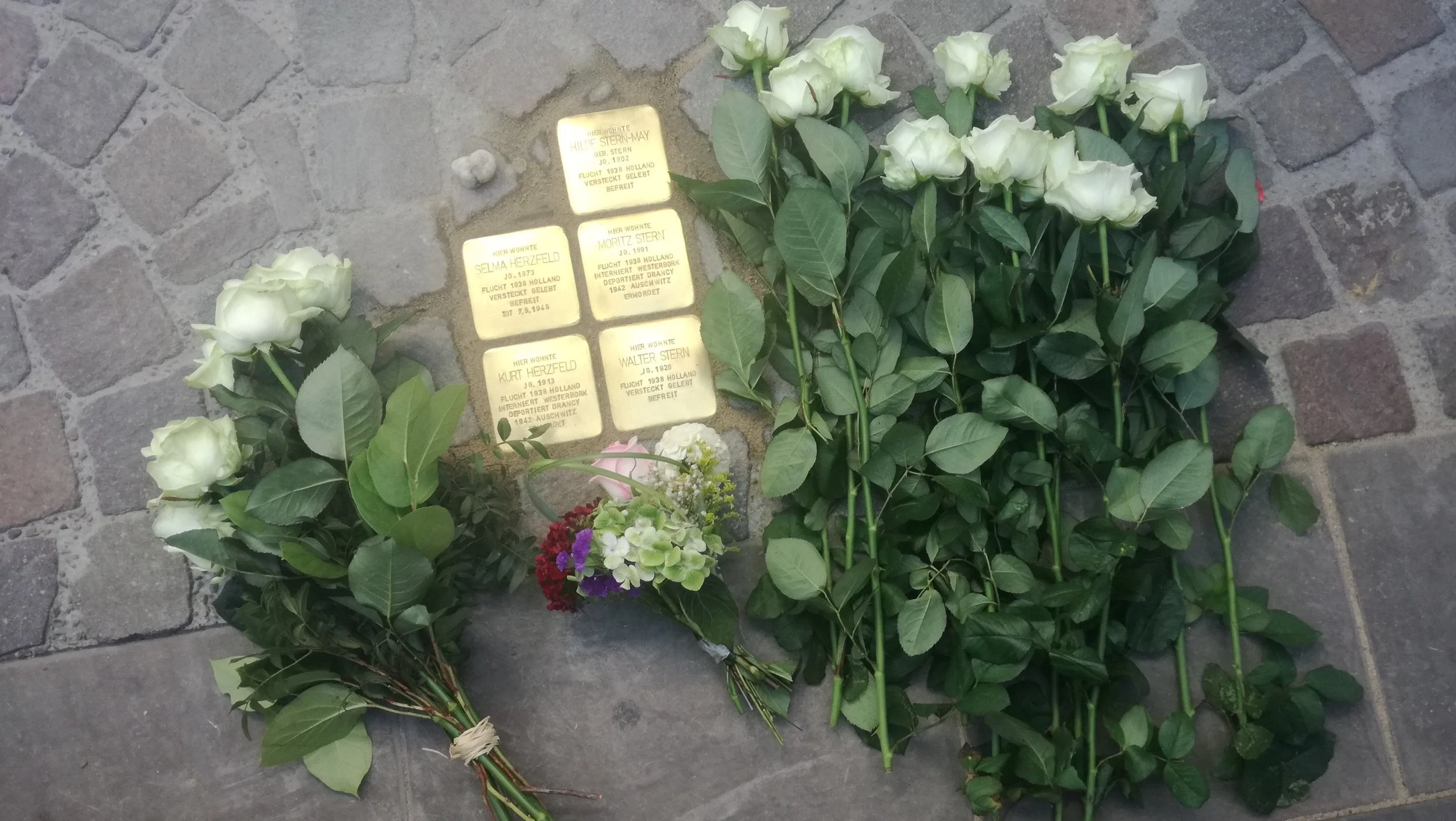
The Stolpersteine (literally "stumbling stones") Irene Stern Frielich laid in front of the last willful residence of her father and family in Bocholt, Germany.
A recurring theme is “living memory”—memorials that evolve through participation, maintenance, and reinterpretation by future generations. Dr. Young acknowledges the tension in memorializing tragedies in which communities no longer exist, stressing the need to restore not just the absence but the lives once lived. Ultimately, he invites visitors to approach memorials with openness, allowing their own emotional responses to deepen understanding of history and self.
The Essential Point
The most powerful memorials don’t dictate meaning—they create spaces where visitors actively experience, interpret, and carry forward memory in ways that remain meaningful across generations.
Social Media
The Texture of Memory
James’ book recommendation: Occupied Words: What the Holocaust Did to Yiddish

About Jeff
Jeff Ikler is the Director of Quetico Leadership and Career Coaching. “Quetico” (KWEH-teh-co). He works with leaders in all aspects of life to identify and overcome obstacles in their desired future. He came to the field of coaching after a 35-year career in educational publishing. Prior to his career in educational publishing, Jeff taught high school U.S. history and government.
Jeff has hosted the “Getting Unstuck—Cultivating Curiosity” podcast for 5 years. The guests and topics he explores are designed to help listeners think differently about the familiar and welcome the new as something to consider. He is also the co-host of the Cultivating Resilience – A Whole Community Approach to Alleviating Trauma in Schools, which promotes mental health and overall wellness.
Jeff co-authored Shifting: How School Leaders Can Create a Culture of Change. Shifting integrates leadership development and change mechanics in a three-part change framework to help guide school leaders and their teams toward productive change.
Show Credits
"Getting Unstuck" is commercial-free. It’s brought to you by Jeff Ikler, his amazing guests, and Neil Hughes, the best engineer a podcaster could ask for.
"Getting Unstuck" theme music: Original composition of "Allegro ben ritmato e deciso" by George Gershwin. Arrangement and recording courtesy of Bruno Lecoeur.